

How can I create privacy in my backyard?

Get a FREE Design Consultation! ($500 Value - Limited Time)
Get in touch for a free consultation and estimate

Creating true backyard privacy involves more than just fences or hedges. It's about a strategic landscape design that blocks sightlines from neighbors while eliminating hiding spots for intruders. This secure approach uses layered planting, smart lighting, and specific plant choices to create a safe, secluded outdoor living space.
The Privacy Paradox: How Your Secluded Oasis Might Be a Burglar's Dream
Every homeowner craves a private backyard oasis—a secluded garden space to unwind, entertain, or simply enjoy a quiet morning coffee without feeling watched. The common instinct is to create total isolation. We see it all the time: homeowners request the tallest, densest privacy fence allowed by local zoning regulations or want to plant a fast-growing, impenetrable wall of Leyland Cypress. The goal is to create a fortress of solitude. But here's the dangerous paradox: the very features that make your yard feel completely hidden from your neighbors also make it a perfect, low-risk workplace for a burglar.
An opaque, six-foot wood fence or a thick, unpruned privacy hedge creates a complete visual barrier. Once an intruder is over that wall, they are invisible. They have all the time in the world to work on a back door, a sliding glass door, or a ground-floor bathroom window, completely shielded from the view of passersby or concerned neighbors. In fact, security experts warn that tall, flower-bearing bushes lined up against a house wall are not advisable as they provide cover for burglars to get close and break a window. What you’ve designed as your private outdoor room has inadvertently become a safe zone for criminal activity.
From Seclusion to Security: A Smarter Approach to Backyard Privacy
So, how do you block neighbors from seeing your yard without rolling out the welcome mat for intruders? The answer lies in shifting your mindset from total seclusion to strategic security. The goal isn't to create a compound, but a "secure sanctuary." This landscape design philosophy is about making your private space feel comfortable and enclosed for you, but dangerously exposed and unattractive to an unwanted guest. It’s a nuanced approach that requires more thought than simply planting a straight line of Arborvitae, but the peace of mind it provides is immeasurable.
Hostile (But Beautiful) Landscaping
One of the most effective ways to add a layer of security is through "defensive" or "hostile" landscaping. This doesn't mean your backyard needs to look like a fortress lined with barbed wire. It means using plants with natural defensive characteristics—like thorns, dense branches, or prickly leaves—in vulnerable areas. These screening plants create a painful, noisy, and time-consuming barrier for anyone trying to cross them. You can use these plants to create a natural privacy fence that also protects.
Consider placing thorny shrubs or climbing vines under first-floor windows or along a back fence line. A would-be intruder is far less likely to risk climbing over a trellis covered in climbing roses or trying to quietly push through a dense barberry hedge. Some plants are particularly formidable; for instance, thorny plants like bougainvillea, which can grow to 40 feet and has dangerous sap, can be used to repel and prevent intruders in weak areas of a yard. Other excellent choices include Firethorn (Pyracantha), Japanese Barberry, or Holly. These plants add texture, color, and beauty to your landscape while serving a vital security function.
Designing in Zones: The Key to a Secure Sanctuary
A secure landscape design thinks about your property in zones. Your front yard is a public-facing zone where visibility is key. It should feel open and "park-like," sending a clear message that there's nowhere to hide. This is where the principles of Crime Prevention Through Environmental Design (CPTED) come into play. A core tenet of this approach is that to prevent intruders from hiding, keep shrubs under 3 feet tall and prune trees so branches are 7 feet or more off the ground. This maintains clear sightlines from the street to your front door.
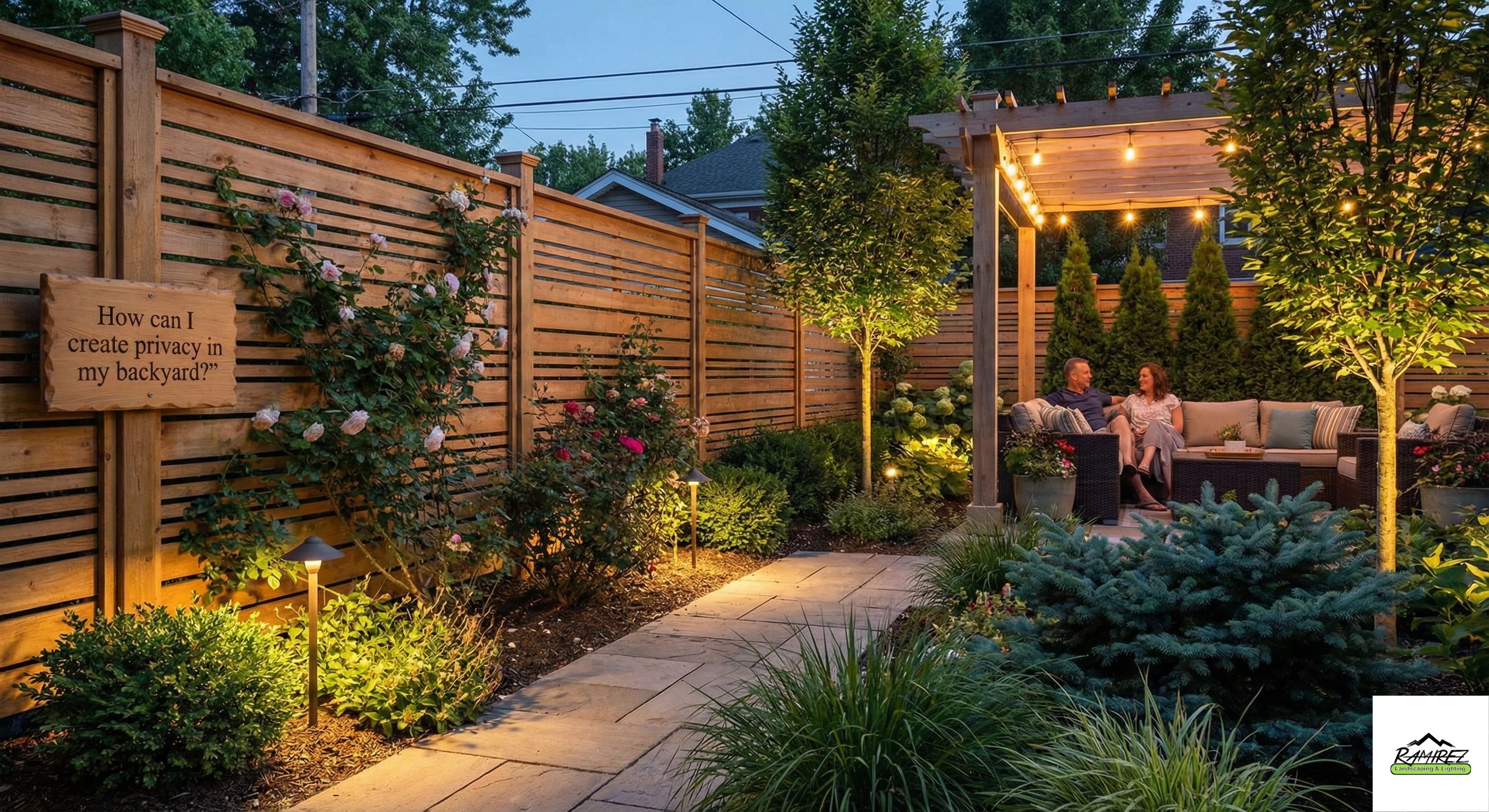
Your backyard is the private zone, but the same principles of visibility apply, just in a different way. Here, you use layered planting to build up privacy where it's needed most—like on a patio or deck—while leaving other areas more open. You might use a row of tall, columnar evergreen trees along the property line to block a neighbor’s second-story window, but keep the space between those trees and your home relatively open and well-lit. This approach allows you to create a secluded garden feeling in specific areas without compromising the overall security of your home.
Strategic Visibility: Creating Privacy That Works For You, Not Against You
The ultimate goal is to control who can see what, and when. You want to feel unobserved by neighbors during your family barbecue, but you want a potential intruder to feel like they are on a brightly lit stage. This is achieved through a combination of smart hardscaping, landscape lighting, and proper plant maintenance.
Fencing and Walls Reimagined
Instead of a solid privacy fence, consider semi-transparent options. A horizontal slat fence with small gaps between the boards, a lattice top fence, or a shadowbox fence breaks up sightlines from a distance, giving you a sense of enclosure without creating a solid wall of concealment. These designs obscure the view for a casual glance but don’t provide total cover for someone lurking. For a more classic look, a stone wall or retaining wall can define your space and, when combined with thorny shrubs on top, create a formidable barrier. Wrought ironwork elements in a garden gate or fence panel can also increase visibility in key areas.
The Role of Strategic Landscape Lighting
Outdoor lighting is one of the most powerful tools in a secure landscape design. We're not talking about a single, harsh floodlight that creates deep shadows. A pro will design a system of low-voltage landscape lighting that casts a gentle, even glow across the backyard. Uplighting on trees, path lighting, and lights near entry points work together to eliminate dark corners. When you add motion-activated spotlights over vulnerable areas like back doors or gates, you create a powerful deterrent that makes an intruder feel instantly exposed. This provides security 24/7.
Pruning for a Clear View
Maintenance is a critical component of strategic visibility. That dense privacy hedge you planted needs regular care. Instead of letting it grow into a solid mass, consider pruning the lower branches of evergreen trees to raise the canopy. This technique, known as "limbing up," maintains the privacy screen at eye level and above while creating a clear view underneath. An intruder can’t hide at the base of the trees, and you maintain a better line of sight across your entire backyard space. This makes a huge difference in how secure a home feels.
Comparing Approaches: Total Isolation vs. Strategic Security
When you're looking at landscaping ideas online on sites like Pinterest or Houzz, it's easy to be drawn to images of completely enclosed spaces. But it’s crucial to understand the trade-offs. Here is a look at how the two philosophies stack up against key factors that professionals and contractors consider.
Deterrence of intruders vs. simple visual privacy
Total Isolation: Prioritizes blocking all sightlines. This provides maximum visual privacy from neighbors but offers zero deterrence to intruders. In fact, it provides cover, making a break-in easier and less risky for the criminal.
Strategic Security: Balances visual privacy with deterrence. It uses thorny plants, clear sightlines near the home, and strategic lighting to make the property an actively hostile environment for intruders while still shielding specific areas like a patio from view.
Maintenance requirements of plants/hedges
Total Isolation: Often relies on very fast-growing privacy trees like Leyland Cypress, which require aggressive and frequent shearing to keep in check. Neglecting them for even one season can result in an overgrown, unmanageable wall that can damage property or encroach on neighbors.
Strategic Security: Involves more thoughtful plant selection. It may use slower-growing evergreen shrubs like boxwood or strategically placed ornamental grasses that require less frequent but more specific pruning to maintain sightlines and shape. The overall maintenance commitment can actually be lower over the long term.
Aesthetics and curb appeal
Total Isolation: Can result in a monolithic, fortress-like look. A solid 6-foot fence or a wall of identical trees can feel oppressive and may detract from the overall garden design and curb appeal of the home.
Strategic Security: Promotes a more dynamic and layered landscape design. The use of various plants, semi-transparent hardscaping like a vertical garden or living wall, and integrated outdoor lighting creates a more visually interesting, beautiful, and welcoming outdoor space.
Fire safety and plant flammability
Total Isolation: This is a major concern in certain regions. Creating a dense, unbroken wall of vegetation right up to the property line can be a serious fire hazard. As experts from fire-safe councils note, in wildfire-prone areas, dense plant privacy screens can become fuel for wildfires; many common choices like Italian cypress and bamboo are highly flammable.
Strategic Security: Aligns with fire-safe landscaping principles by creating defensible space. It emphasizes breaking up plant masses, using fire-resistant plant species, and avoiding the creation of "fuel ladders" where fire can climb from the ground into trees and toward the home.
Long-term effectiveness and plant growth habits
Total Isolation: Often provides "instant privacy" with fast-growing trees. For example, to create a dense privacy screen, American arborvitae trees can be planted as close as three feet apart from the center of each tree. However, this close planting can lead to disease and die-off as the trees mature and compete for resources, creating gaps in your screen.
Strategic Security: Focuses on the mature size and habit of plants. A landscape architect or seasoned pro will design for the long term, ensuring plants have room to grow without becoming a liability, thus creating a sustainable and effective privacy plan that improves with age.
Making the Right Choice for Your Needs
Ultimately, there is no single "best" solution. The right approach to backyard privacy depends entirely on your property, your priorities, and your tolerance for risk. To help you decide, consider which of these profiles best describes you.
- The Security-Conscious Homeowner: If your primary concern is actively deterring potential intruders, you should lean heavily into the Strategic Security model. Prioritize a layered system of thorny plants along your perimeter, especially in vulnerable spots. Install comprehensive, motion-activated landscape lighting. Opt for semi-transparent fencing and keep all trees and shrubs near your home well-pruned to eliminate hiding spots. Your goal is to make your home look like a difficult, well-observed target.
- The Private Family: If your main goal is creating a safe, secluded space for your children to play and for you to relax, a hybrid approach is ideal. You can use a taller, denser living wall or privacy hedge along the property line that faces your most intrusive neighbors. However, you must pair this with the core principles of security. Ensure the area between this privacy screen and your house remains open and well-lit. Use thorny plants under windows and avoid creating any blind spots near doors or gates.
- The New Homeowner in a Wildfire Zone: For you, fire safety is non-negotiable. You must reject the Total Isolation model of dense, contiguous plantings. Your focus should be on creating defensible space. Use non-combustible materials like a stone wall, corrugated metal fence, or metal privacy screen as your primary barrier. If you add plants for privacy, choose fire-resistant species, plant them in separated groups, and keep them well-irrigated and maintained. Your landscape must provide privacy without providing fuel for a fire.
Creating a backyard that feels both private and safe is a masterful balance of art and science. It requires a deep understanding of plant biology, security principles, and landscape design. While some homeowners might tackle elements of this with DIY backyard privacy projects, the expertise of professionals can help you avoid costly mistakes and create a truly cohesive and secure outdoor living area. The right landscape contractors will add immense value and ensure the final look is exactly what you envisioned.
For over 24 years, the team at Ramirez Landscaping & Lighting has been helping homeowners in the Greensboro, NC, area design and build beautiful, secure outdoor sanctuaries. We believe that true privacy comes from smart design, not just high fences. If you're ready to transform your backyard into a space that offers both seclusion and peace of mind, contact our expert team today for a personalized consultation.