

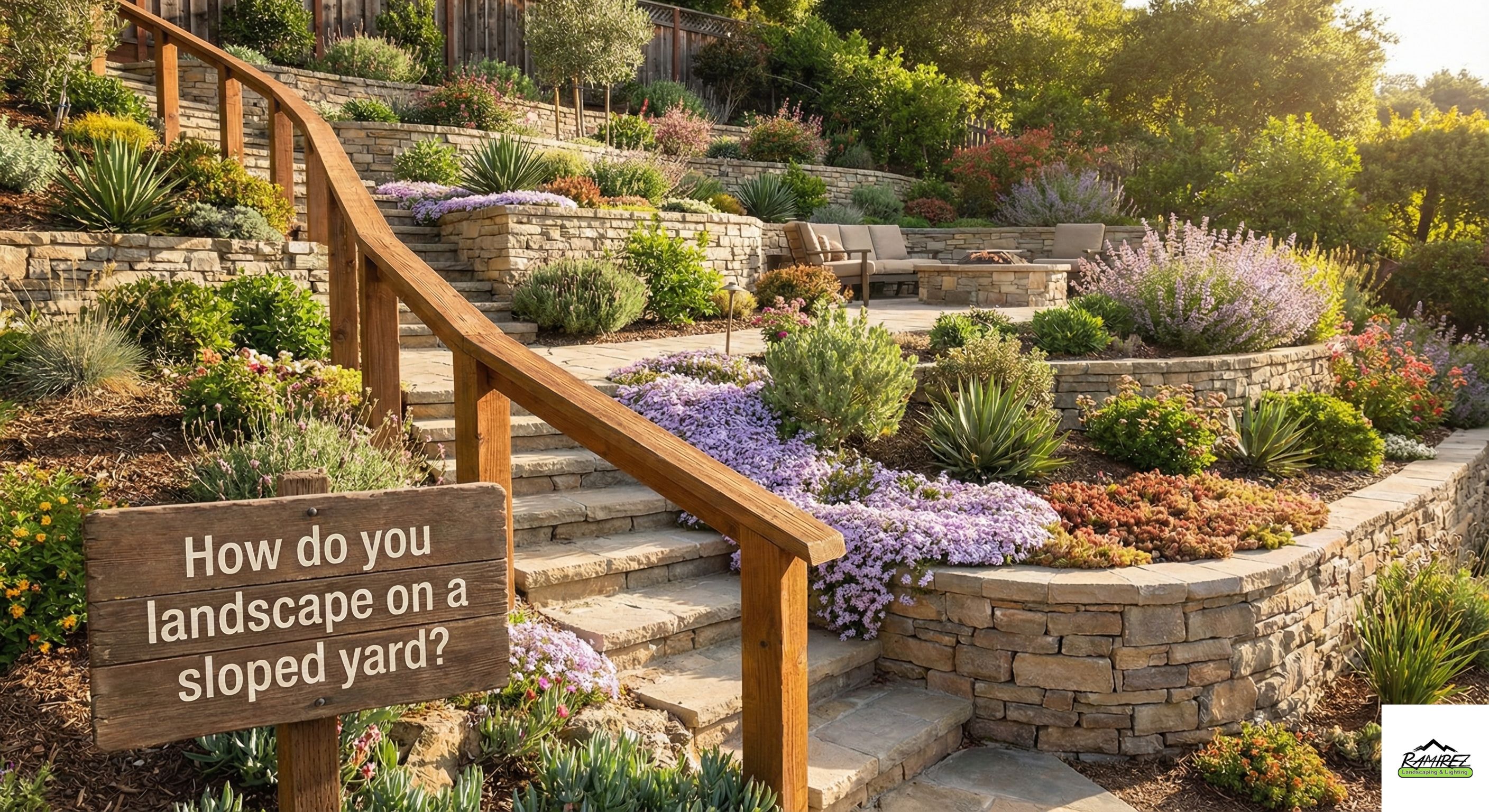
How do you landscape on a sloped yard?

Get a FREE Design Consultation! ($500 Value - Limited Time)
Get in touch for a free consultation and estimate

Landscaping a sloped yard effectively involves more than just picking attractive plants or design ideas. The most successful and long-lasting solutions begin with a "function-first" audit to diagnose core challenges like erosion, water runoff, and accessibility. By addressing these foundational problems with strategic solutions such as retaining walls, terracing, and proper planting, you can transform a difficult slope from a landscape liability into your property's most stunning and functional asset.
The 'Function-First' Audit: Your Slope's Pre-Design Checkup
Before a single shovel hits the ground or a dollar is spent, the most critical step in any sloped yard project is a thorough analysis. Many homeowners jump straight to looking at backyard ideas for a sloped lot, but this aesthetic-first approach often leads to solutions that fail to address the root cause of the problem. A function-first audit forces you to think like an engineer, ensuring your investment is both beautiful and built to last.
Assessing Your Slope's Grade and Stability
The steepness of your landscape slope dictates the entire scope of the project. A gentle incline might only require specific planting techniques, while a severe drop-off presents a significant challenge. Observe your yard for signs of instability: are there small channels carved by water? Are tree roots becoming exposed? These are clear indicators that your soil is actively eroding. For steep slopes over 50% (a 45-degree angle), purely horticultural solutions are often insufficient. In these cases, installing a retaining wall is a recommended solution, and it should include a good drainage system behind it to prevent cracking or collapse according to landscape experts. Understanding these basics is the first step in proper landscape grading for a sloped yard.
Mapping Water Flow and Drainage Issues
Water is the primary force shaping your slope. During the next heavy rain, watch where the water goes. Does it sheet across the entire yard, carrying mulch and topsoil with it? Does it collect in specific areas, creating a swampy mess? Or worse, does it flow directly toward your home's foundation? Identifying these pathways is crucial. Many common issues can be solved with targeted sloped yard drainage solutions. A well-placed French drain installation on a slope can intercept subsurface water, while strategic grading can redirect surface runoff away from sensitive areas, protecting your home and landscape investment.
Identifying Usability Gaps
A common complaint is what to do with an unusable steep backyard. The audit phase is the time to dream about function. Where would you like to sit and enjoy a morning coffee? Is there a place for children to play safely? Do you envision planting a vegetable garden on a slope? Answering these questions helps define the project's goals. Creating usable space on a slope isn't an afterthought; it's a primary objective that informs every decision, from the placement of a retaining wall to the design of a pathway.
'Working With' vs. 'Taming' the Slope: Choosing Your Strategy
Once you've diagnosed your slope's functional needs, you face a fundamental choice: do you work with the natural contours of the land, or do you actively reshape it? There is no single right answer; the best approach depends on your slope's severity, your budget, and your goals.
The 'Working With' Approach: Naturalistic and Organic
This strategy embraces the existing topography. Instead of large-scale excavation, it uses softer, more organic solutions. Think of designing a switchback path on a hillside that meanders gracefully down the incline rather than cutting a straight, steep staircase. This approach is ideal for a wooded hillside, relying on layered planting on a slope with native shrubs and groundcovers to create a stable, low-maintenance landscape. This is a great way to achieve no-mow slope landscaping and can often be achieved with sloped front yard landscaping without retaining walls
- Pros: Generally lower cost, less disruptive to the existing ecosystem, creates a soft and natural aesthetic.
- Cons: May not solve severe erosion or drainage problems, and won't create large, level areas for activities like patios or play sets.
The 'Taming' Approach: Structural and Engineered
When you need to create flat ground in a sloping garden, a structural approach is necessary. This involves hardscaping a steep slope with man-made elements to fundamentally alter the landscape. Terracing the yard with a series of low walls is a classic technique. For more significant grade changes, a substantial retaining wall becomes the backbone of the design. These engineered solutions are powerful tools for hillside stabilization techniques and are essential when the goal is to build a deck on uneven ground or install a sloped yard fire pit area.
- Pros: Provides maximum erosion control, creates significant flat and usable real estate, allows for features like patios and garden
- Cons: Higher cost to landscape a sloped yard, more complex installation, and may require permits (it's wise to always ask "do I need a permit for a retaining wall?" before starting.
Transforming Problems into Features: Practical Solutions for Your Slope
The beauty of the function-first method is that the solutions to your problems often become the most stunning features of your design. Erosion control isn't just about utility; it's an aesthetic opportunity.
Erosion Control as an Aesthetic Opportunity
Instead of seeing erosion control as a chore, view it as the foundational layer of your garden design. The use of boulders in hillside landscaping, for example, does more than just hold soil; it adds texture, scale, and a powerful natural element. A carefully designed rock garden on a steep incline can become a dramatic focal point. For plant-based solutions, select plants with thick roots, such as creeping juniper and sedum, which can be used on slopes to anchor dirt in place and control erosion as recommended by horticulturalists. These plants, combined with proper use of landscape fabric for slope stabilization and a thick layer of mulch, create a resilient and beautiful surface.
Unlocking 'Hidden' Real Estate with Strategic Hardscaping
Retaining walls are the ultimate tool for reclaiming a sloped yard. Well-built retaining walls stabilize sloped yards by preventing soil from washing away due to heavy rain and winds according to home improvement experts. Whether you opt for a modern timber retaining wall for a garden slope or a classic concrete block retaining wall for slope stability, the result is the same: new, level areas. The scale of such projects can be immense; one project to tame a steeply sloped one-acre lot required 5 tons of stone and 160 yards of fill and topsoil to build retaining walls, staircases, and pathways as documented in a case study. These newly created zones are perfect for sloped backyard patio ideas or even answering the question, "can you put a shed on a sloped yard?" by first building a level foundation.
Ensuring Safe and Elegant Accessibility
A beautiful landscape is useless if you can't access it. Thoughtful pathways and steps are crucial. Building a walkway on a steep incline requires careful planning to ensure a comfortable grade. For steeper areas, stone steps on a hillside or terraced landscaping with pavers offer a secure and attractive solution. One highly effective strategy is building brick stairs to connect a covered back patio to a lower brick patio, a technique that makes a sloped backyard functional and accessible proven in many successful designs. This integration of hardscape makes the entire yard feel connected and intentional.
Common Questions and Design Principles for Sloped Yards
When approaching a sloped yard project, several design principles and common questions arise that can help guide your decisions and create a more cohesive, professional-looking result.
What is the best low-maintenance hillside landscaping?
Truly low-maintenance hillside landscaping is a system, not a single product. It starts with choosing the right plants, specifically drought tolerant plants for hillsides and native species that thrive in your local conditions without constant care. Combining these with the best ground cover for steep slopes, like creeping phlox or pachysandra, can create a "green mulch" that suppresses weeds and holds soil. The goal is to create a self-sustaining plant community that requires minimal intervention once established, making it a far better option than trying to maintain a sloped lawn.
Understanding Landscape Design Rules of Thumb
Professional designers often use simple rules to create visual harmony. When you ask, "What is the rule of 3 in landscaping?" you're touching on a core concept of grouping. Planting in odd numbers—threes, fives, and sevens—creates a more natural and visually appealing arrangement than rigid, even-numbered groupings. Similarly, the "70 30 rule in gardening" is a guideline for balance. This can be applied in various ways, such as using 70% evergreen plants for year-round structure and 30% perennials for seasonal color, or maintaining a 70/30 ratio of plant material to hardscaping to ensure the landscape feels lush and not overwhelmed by stone or concrete.
Making the Right Choice for Your Needs
Ultimately, the perfect strategy for your sloped yard depends entirely on your property's specific challenges and your family's needs. There is no one-size-fits-all solution.
For the Safety-Conscious Parent
Your primary need is creating a safe environment for children and family. Your focus should be on structural solutions that eliminate hazards. Prioritize creating at least one level, secure play area using a sturdy retaining wall and proper fill. Invest in wide, well-lit steps instead of steep ramps—consider building steps on a sloped yard with a gentle rise and run. For pathways, choose non-slip materials. Child-friendly sloped backyard ideas include integrating features like a slide built into the hillside or a small climbing wall on a lower retaining wall.
For the Frustrated Gardener
You struggle with every rainstorm washing away your hard work, topsoil, and nutrients. Your solution lies in creating stability. Terracing a yard without retaining walls might work for gentle slopes, but for most, a series of tiered garden beds for a hillside is the answer. These structures, whether made from timber or masonry, stop erosion in its tracks and create perfectly level planting zones. This allows you to control the soil quality, build raised garden beds on a slope, and finally give your plants the stable environment they need to thrive.
For the Flood-Weary Homeowner
Your main concern is property protection from water damage. Your first priority must be sloped yard drainage solutions. This isn't just a landscaping project; it's a home defense strategy. Your plan must include strategic grading to ensure water flows away from your foundation. A professionally installed French drain behind any retaining walls is non-negotiable to relieve hydrostatic pressure. Consider a rain garden or bioswale at the base of the slope to capture and manage runoff, turning a water problem into a beautiful garden feature.
Tackling a sloped yard is a significant undertaking, but one that pays dividends in beauty, functionality, and property value for years to come. The key is a thoughtful, function-first approach that solves underlying problems rather than just covering them up. For over 20 years, the team at Ramirez Landscaping & Lighting has specialized in transforming challenging slopes into stunning, enduring landscapes for homeowners throughout the Greensboro, NC, area. If you're ready to see the full potential of your property, contact us today for a comprehensive on-site consultation and a plan tailored to your unique needs.