

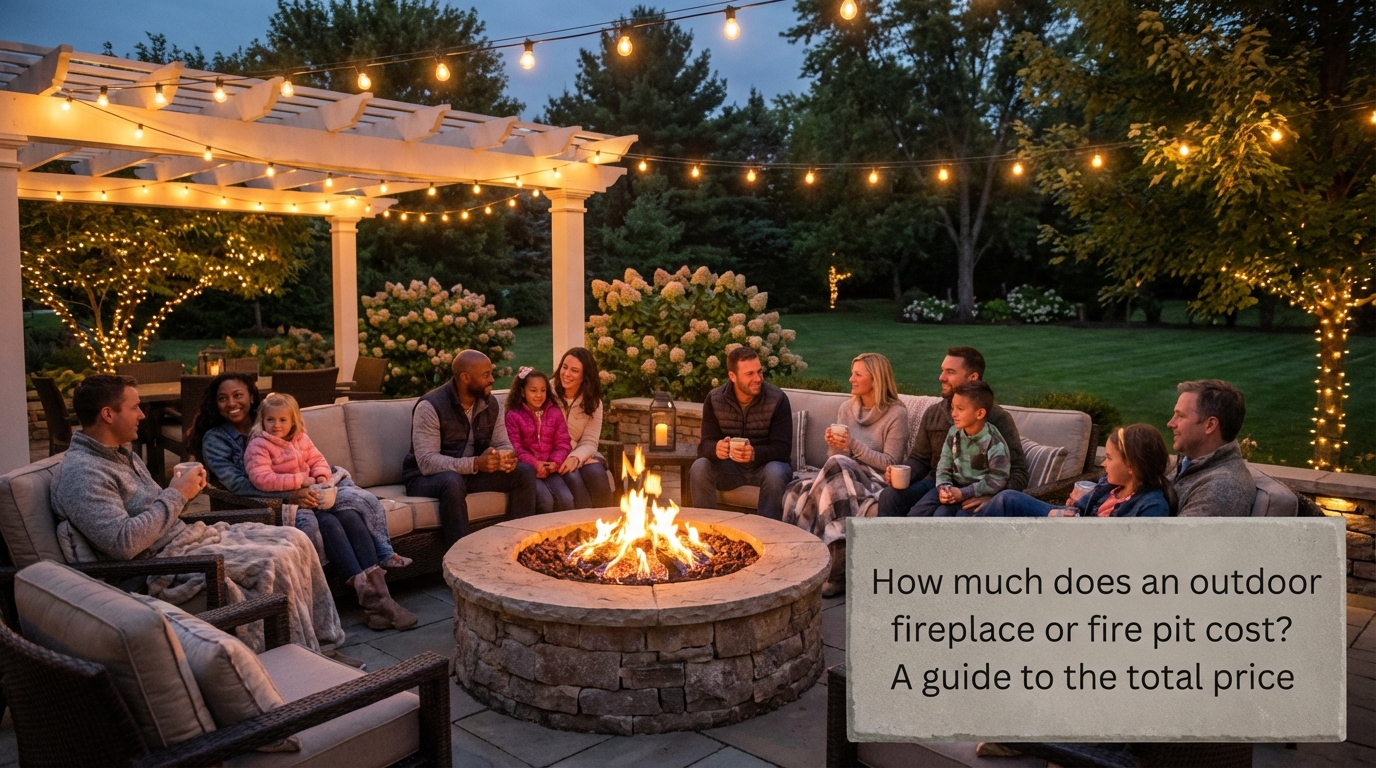
How much does an outdoor fireplace or fire pit cost?

Get a FREE Design Consultation! ($500 Value - Limited Time)
Get in touch for a free consultation and estimate

The average cost for a professionally installed outdoor fireplace or fire pit ranges from $3,000 to over $20,000. However, this initial price is only part of the story. The true cost includes long-term fuel consumption, maintenance, and the unseen impacts of its combustion technology on your health and lifestyle.
The Total Cost of Ownership: Beyond the Initial Quote
When people ask about the cost of an outdoor fire feature, they're almost always focused on the number on the contractor's proposal. That number, the installation cost, is certainly significant. But over the 10, 15, or 20 years you'll enjoy your outdoor living space, that initial figure can be dwarfed by ongoing expenses. Focusing only on the upfront price is a common mistake that often leads to buyer's remorse.
The true, long-term cost—what we call the Total Cost of Ownership—is a combination of three distinct factors:
- Initial Installation: This includes design, materials like stone or concrete pavers, labor costs for any masonry work, and specialized tasks such as running a natural gas line.
- Ongoing Operating Costs: This is primarily the fuel cost. Whether you're buying seasoned firewood, paying for natural gas on your utility bill, or refilling a propane tank, this is a recurring expense for the life of the feature. It also includes maintenance costs, from simple ash cleanup to more technical repairs or replacing components on high-efficiency units.
- Lifestyle & Environmental Costs: These are the "hidden" expenses. How much is your time worth for splitting and stacking wood versus flipping a switch? How does excessive smoke impact your family's health or your relationship with neighbors? Can you even use your wood-burning pit during a burn ban? These factors have a real-world cost on your enjoyment and usability.
Understanding this complete financial picture is the only way to make an informed investment in your backyard design and ensure the centerpiece of your outdoor entertainment area brings joy, not frustration.
Deconstructing the Options: Kit vs. Custom vs. Appliance
The structure of your fire feature is the single biggest determinant of its upfront cost and long-term performance. There are three primary paths to consider, each with a different balance of price, aesthetics, and efficiency.
Prefabricated Fireplace & Fire Pit Kits
Prefabricated outdoor fireplace kits and fire pit kits, often from respected manufacturers like Belgard, Unilock, or Techo-Bloc, are a popular middle ground. These systems consist of pre-cut, interlocking retaining wall blocks or panels that a landscaping contractor assembles on a prepared foundation. The result is a durable, handsome feature that looks much like a custom-built project.
The primary advantage of kits is cost control and speed. Because the components are engineered to fit together, the masonry work is simplified, reducing labor costs and project timelines. However, your design choices are limited to the manufacturer's catalog, and the combustion technology is often a simple fire brick-lined box or a basic fire pit ring, which isn't optimized for fuel efficiency or low smoke emissions.
Custom-Built Masonry Fireplaces & Pits
A custom-built fireplace or pit is the ultimate expression of personal style for your outdoor living space. Designed by a landscape architect or experienced landscaper and built by skilled masons, it can be crafted from any number of fire-resistant materials, including natural stone, brick, or a custom stone veneer over a block core. The design possibilities are endless, from a grand fireplace with a hearth and mantel that anchors a paver patio to a sunken fire pit surrounded by a built-in seating wall.
This level of customization comes at a price. A custom hardscaping project has the highest potential installation cost due to the intensive labor and specialized skill required. The performance of a custom wood-burning feature also depends heavily on the mason's understanding of firebox and chimney geometry to ensure proper drafting and minimize smoke spillage.
High-Efficiency Wood-Burning Appliances
A newer category gaining traction is the dedicated, high-efficiency outdoor wood-burning appliance. Think of these less like a traditional fireplace and more like an outdoor-rated wood stove. These engineered steel fireplaces are designed for performance, not just looks. They are built to be enclosed within a custom structure, giving you the appearance of a masonry fireplace but with the performance of a modern heating unit.
Their primary benefit is combustion technology. Certified wood-burning appliances typically use a catalyst, secondary combustion, or a combination of the two technologies (hybrid) to meet emission requirements. This means they burn wood more completely, generating far more heat and far less smoke from the same amount of firewood. While the appliance itself represents a significant upfront cost, the long-term fuel savings and reduced smoke can be substantial.
The 'Efficiency Investment': Why a Higher Upfront Cost Saves You Money
It seems counterintuitive, but spending more money upfront on a fire feature can lead to significant savings over its lifespan. This is the principle of the "efficiency investment."
Consider a traditional open-air wood-burning fire pit. It's a fantastic source of ambiance, but it's incredibly inefficient. A huge amount of heat radiates straight up into the night sky, and the open flame consumes firewood at a rapid pace. A high-efficiency wood appliance, by contrast, controls airflow and uses secondary combustion to burn off smoke particles, converting them into additional heat. You'll stay warmer while using 30-50% less firewood over the course of an evening.
The same logic applies to gas fire pits. A basic DIY setup might use a simple pipe ring with holes drilled in it. A professionally installed unit will feature a high-quality stainless steel burner engineered to produce a fuller, more natural-looking flame with better fuel-to-air mixing. Upgrading to an electronic ignition system not only adds convenience but also enhances safety by automatically shutting off the gas flow if the flame is extinguished. While gas fire pits are more expensive because they require a more involved installation, they offer minimal mess, reduced emissions, and overall lower upkeep. This investment in better technology pays dividends in both fuel cost and peace of mind.
The Hidden Health & Environmental Invoice
We can no longer ignore the real-world impact of wood smoke. The romantic smell of a campfire is, scientifically speaking, a cloud of fine particulate matter (PM2.5), carbon monoxide, volatile organic compounds (VOCs), and other pollutants. For families with children, elderly members, or individuals with respiratory issues like asthma, this "hidden invoice" is a significant health concern.
This is where modern combustion technology provides immense value. Features marketed as a "smokeless fire pit" are designed to dramatically reduce this impact. As the best smokeless fire pits burn wood more thoroughly, which helps to reduce smokiness. This is achieved through clever designs that superheat air and inject it back into the top of the fire, burning off smoke before it can escape. The same principle applies to EPA-certified appliances.
Beyond personal health, local regulations are increasingly affecting when you can enjoy a wood fire. Many municipalities issue "no-burn days" during periods of poor air quality or high fire danger, rendering a traditional wood fireplace or outdoor pit unusable. A natural gas or propane fire feature is exempt from these restrictions, guaranteeing you can use your investment whenever you want. For people who entertain frequently, this reliability is a major selling point. In fact, propane fire pits are perfect for quick and easy backyard hangouts without worrying about firewood time-consuming cleanup.
Key Factors in Your Decision
To help you weigh your options, we've broken down the core decision factors. Consider how you would prioritize each one for your family's needs and your property.
Initial Installation Price
This is the total cost for the project, from foundation to finish. Portable fire pits ($200 - $1,500) and chimineas offer the lowest entry point. A professionally installed fire pit kit typically ranges from $4,000 to $9,000. Custom masonry fire pits start around $7,000 and can exceed $20,000. Outdoor fireplaces, being larger and more complex, generally start at $8,000 for a kit and can easily reach $30,000 or more for a custom stone structure. For gas models, factor in an additional $2,000-$5,000 for gas line installation.
Fuel Type & Ongoing Cost
Wood can be perceived as "free" if you have your own supply, but it requires labor to cut, split, and stack. Purchased firewood costs between $150-$500 per cord. Natural gas is the most cost-effective piped fuel, billed through your utility company. Propane offers the ultimate portability with a propane tank but is the most expensive fuel per hour of burn time.
Maintenance & Cleanup Effort
Wood-burning features require the most work. You'll be regularly scooping ash and periodically having the chimney or flue inspected and cleaned for creosote buildup. Gas and propane fireplaces or pits are virtually maintenance-free, requiring only an occasional cleaning of the gas burner kit, lava rocks, or fire glass and a weatherproof cover.
Smoke & Emissions Impact
A traditional masonry wood pit or fireplace will produce the most smoke and particulate emissions. A high-quality smokeless fire pit or a modern, high-efficiency appliance significantly reduces this output. Natural gas and propane are the cleanest-burning options, producing almost no smoke or particulate matter.
Safety & Durability
Professional installation is key to ensuring compliance with local building codes and safe clearances from combustible materials, especially on a deck. A proper foundation is critical for the longevity of any built-in feature. Durable materials like fire brick, cast iron, and high-grade stainless steel burners ensure a long service life. Accessories like a spark screen and chimney cap add layers of safety to wood-burning models.
Answering Your Top Questions
Here are direct answers to some of the most common questions we hear from homeowners.
What is the average cost of an outdoor fireplace?
The average cost for a professionally installed outdoor fireplace is between $8,000 and $30,000. A prefabricated kit installed by a landscaping contractor will be on the lower end of that spectrum, while a large, custom-built fireplace with natural stone veneer and an expansive hearth will be at the very top end.
Which is better, an outdoor fireplace or a fire pit?
Neither is universally "better"; it depends entirely on how you want to use your space. An outdoor fireplace acts as a structural anchor for an outdoor living room, defining the space and directing radiant heat towards a specific seating area. A fire pit is more communal, encouraging people to gather around it from all sides for conversation. Pits are generally more casual, while fireplaces create a more formal, room-like feel.
Does an outdoor fireplace add value to a home?
Yes, absolutely. When integrated thoughtfully into a complete hardscaping project with a paver patio and outdoor seating, a well-built outdoor fireplace significantly increases property value. It extends the home's usable living area, boosts curb appeal, and is a highly desirable feature for potential buyers seeking a complete outdoor entertainment area.
Are outdoor fire pits worth it?
An outdoor fire pit is worth the investment if you choose the right one for your lifestyle. If you value convenience and clean air, investing in a gas model will provide years of hassle-free enjoyment. If you love the crackle of a real wood fire, choosing a smokeless model or a design that minimizes smoke will make you a better neighbor and ensure you get more use out of your backyard investment.
Making the Right Choice for Your Needs
The best fire feature is the one that aligns with your budget, lifestyle, and priorities. There is no single "best" choice, only the right choice for you.
For the Budget-Conscious Buyer
If the lowest possible initial installation cost is your primary driver, a simple, wood-burning fire pit built from concrete pavers or a DIY fire pit kit is your most direct path. This option delivers the classic campfire experience at an entry-level price. Be prepared for the trade-offs: more smoke, the effort of sourcing and storing firewood, and regular ash cleanup.
For the Health & Eco-Conscious Family
If you prioritize clean air for your children and neighbors, your investment should be in clean-combustion technology. A professionally installed natural gas fire pit is an excellent choice, providing ambiance with minimal emissions. For those who love a real wood fire, a high-efficiency wood-burning appliance or a top-tier smokeless fire pit like a Solo Stove is the responsible choice, minimizing health impacts while maximizing heat output.
For the Low-Maintenance Entertainer
If your goal is effortless entertaining, convenience is king. A natural gas or propane fire table with an electronic ignition system is the ultimate solution. The ability to create a beautiful, warm fire with the flip of a switch—and extinguish it just as easily with no cleanup—is a luxury that busy people find invaluable. This is the "set it and forget it" option for a pristine outdoor living space.
Ultimately, choosing the right outdoor fireplace or fire pit is about looking beyond the initial price tag to understand the total cost of ownership. By considering fuel, maintenance, and the real-world impact on your lifestyle, you can invest confidently in a feature that will be the cherished heart of your outdoor living space for years to come. At Ramirez Landscaping & Lighting, we've spent years helping homeowners in the Greensboro, NC, area navigate these choices to build beautiful, functional, and valuable outdoor spaces. For a personalized assessment of your property and a clear, no-nonsense quote that considers the long-term value of your investment, contact our expert team today.